An employment verification letter states that a named person works, or used to work, at a firm. It goes on company letterhead. It lists the job title, work dates, status, the issue date, and who signed it.
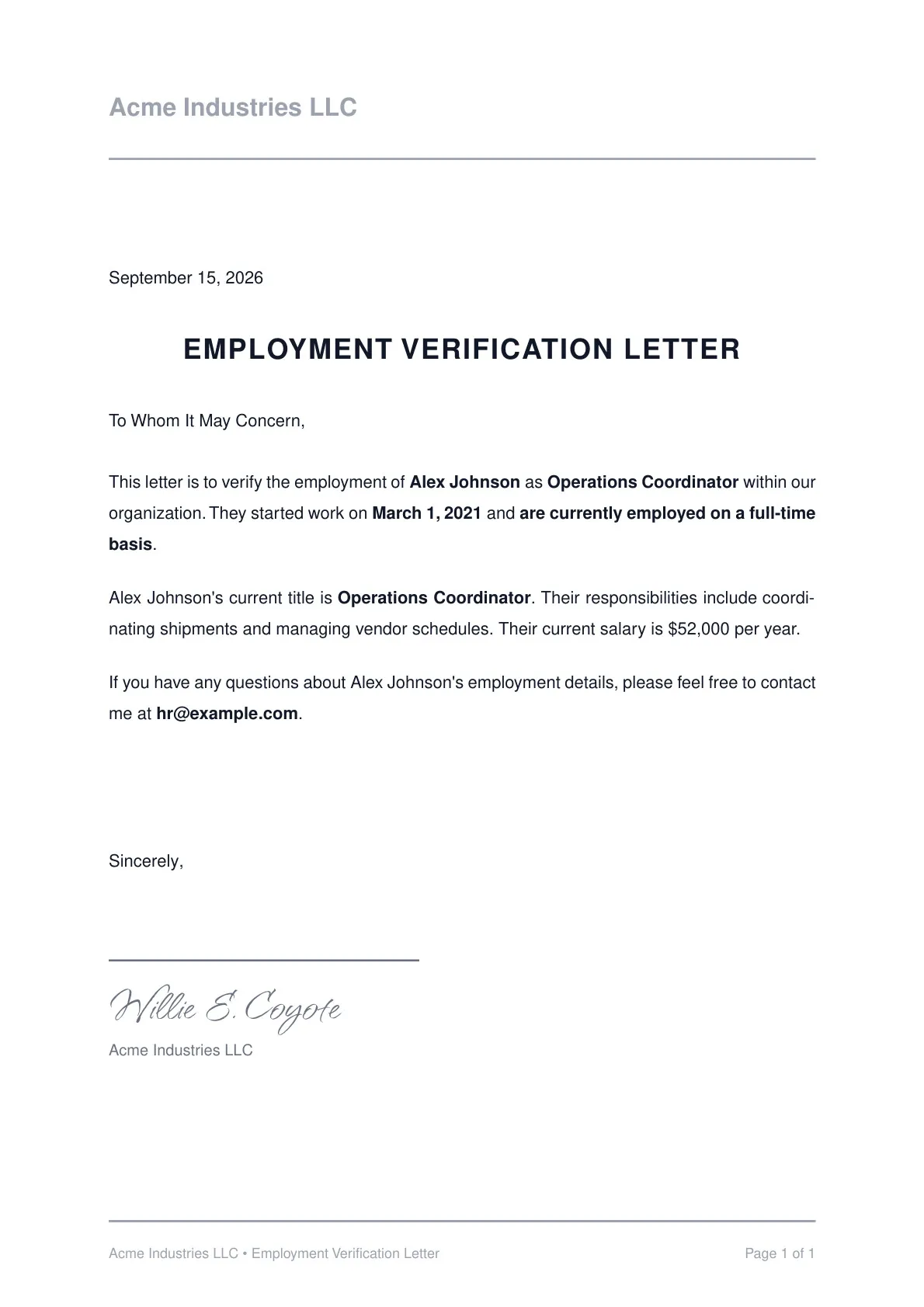
This is an example of a completed employment verification letter. It includes all commonly required fields:
The wording is neutral and widely accepted.
A sample employment verification letter — also called a verification of employment (VOE) letter or a proof of employment letter — confirms that a named person currently works, or previously worked, for an organization. The example above is written on company letterhead and follows the format that most landlords, lenders, and government offices expect. Every line is there for a reason:
Keep the wording factual. A verification of employment letter should never contain a Social Security number, medical information, performance reviews, or personal opinions about the employee — the recipient only needs to confirm the working relationship.
The same sample format is accepted across most situations — only the recipient and the emphasis change:
An employment verification letter sample helps when you need to:
If you need a blank version, use the template instead.
This page shows a filled-in example.
If you want a reusable blank format, see:
Employment Verification Letter TemplateYou do not need to copy this sample manually.
Use the generator to create a personalized version. You can:
1. Enter employer
and employee details
2. Review the live preview.
3. Download the PDF.